Eco-Friendly Home Decor Ideas That Look Great
More and more people today want their homes to look beautiful while being kind to the planet.
More and more people today want their homes to look beautiful while being kind to the planet. Eco-friendly home decor isn’t about giving up style—it’s about making smart, sustainable choices that help the environment and still look amazing. Whether you’re just starting your green living journey or already passionate about sustainability, there are plenty of ways to refresh your space while caring for the Earth.
In this blog, we’ll explore some simple, practical, and stylish eco-friendly decor ideas you can use in every room. From repurposed furniture to natural materials, these ideas will help you create a home that’s both chic and sustainable.
1. Use Reclaimed and Upcycled Furniture
One of the easiest ways to decorate sustainably is by choosing furniture that’s been given a second life. Instead of buying new mass-produced pieces, look for reclaimed or upcycled furniture.
Why it’s great:
- It reduces waste by reusing existing materials
- Each piece has a unique charm and character
- Often made with better craftsmanship than cheap new furniture
Ideas to try:
- Find vintage wooden tables or chairs at thrift stores or flea markets
- Paint or refinish old dressers using eco-friendly paints
- Repurpose crates or pallets into shelves or storage units
By giving old furniture a new home, you not only reduce waste but add a one-of-a-kind look to your rooms.
2. Choose Natural Materials
Natural materials are sustainable, biodegradable, and bring warmth and texture to your home. They create a cozy, earthy vibe that’s hard to beat.
Popular options include:
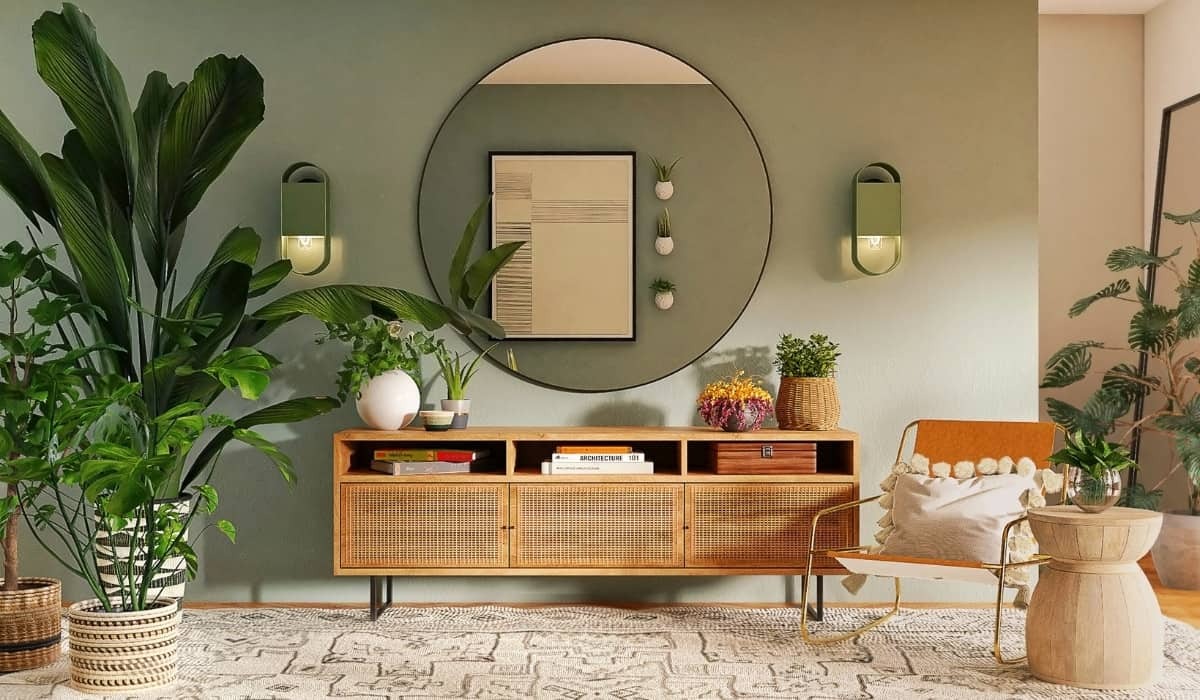
- Bamboo and rattan furniture or decor pieces
- Rugs made from jute, sisal, or wool
- Organic cotton or linen textiles like curtains, cushions, and bedding
Mixing these materials adds a lovely tactile contrast and helps connect your indoor space to nature.
3. Paint with Low-VOC or Zero-VOC Paints
Traditional paints can release harmful chemicals called volatile organic compounds (VOCs) into the air, which can be bad for your health and the environment. Low-VOC or zero-VOC paints are safer options.
Benefits:
- Better indoor air quality for you and your family
- Available in a huge variety of colors and finishes
- Long-lasting and easy to clean
When refreshing your walls, choosing eco-friendly paint is a simple way to go green without sacrificing style.
4. Add Lots of Greenery
Plants are a win-win: they purify the air, bring life and color into your space, and help create a calm, welcoming atmosphere.
Easy-to-care-for options:
- Snake plants (great for beginners)
- Pothos vines, perfect for shelves or hanging baskets
- Fiddle leaf fig trees for a bold statement
Use pots made from recycled or natural materials like terracotta or ceramic to keep your eco-friendly vibe going strong.
5. Opt for Energy-Efficient Lighting
Lighting can have a big impact on your home's energy use. Switch out old bulbs for energy-saving LEDs—they use less power, last longer, and come in warm, cozy tones that look great.
You can also explore:
- Solar-powered outdoor lights for patios and gardens
- Lamps made from sustainable materials like bamboo or recycled metal
- Good lighting not only brightens your space but helps reduce your energy footprint.
6. Choose Sustainable Textiles
Look for fabrics made from organic, recycled, or sustainably produced fibers. These textiles tend to be softer, last longer, and have less environmental impact.
Some choices to consider:
- Organic cotton or hemp curtains and bedding
- Recycled polyester throw blankets or cushions
- Bamboo or linen towels and upholstery fabrics
Sustainable textiles bring softness and style while supporting eco-conscious manufacturing.
7. DIY and Handmade Decor
Supporting artisans and making your own decor keeps things unique and sustainable. Handmade items often use less packaging and more natural materials.
Try:
- Woven baskets, pottery, or macrame wall hangings from local artisans
- DIY projects like painting old jars to use as vases or candle holders
- Upcycling old picture frames or glass jars into decor pieces
These personal touches add character and reduce waste.
8. Recycle and Repurpose Household Items
Before buying new decor, look around your home for things you can reuse or transform.
Creative ideas:
- Turn glass jars into storage containers or plant holders
- Use wooden pallets as coffee tables or outdoor planters
- Frame scraps of beautiful fabric as wall art
Repurposing is both budget-friendly and planet-friendly.
9. Embrace Minimalism
A minimalist approach is naturally eco-friendly because it encourages you to buy less and focus on quality over quantity.
Benefits of minimalism:
- Reduces clutter and waste
- Encourages thoughtful, intentional purchases
- Creates calm, organized spaces that feel peaceful
Keeping only what you truly love helps your home and the environment.
10. Choose Sustainable Flooring Options
If you’re updating your floors, consider eco-friendly materials like cork, bamboo, or reclaimed hardwood. These options are renewable, durable, and add natural beauty to your home.
Why it matters:
- Renewable resources reduce environmental impact
- Many sustainable flooring choices are biodegradable at end of life
- They often provide excellent insulation, improving energy efficiency
Flooring is a big investment—choosing green options is a smart long-term decision.
Conclusion
Eco-friendly home decor is about making smart choices that protect the planet while creating a space you love. It’s not about sacrificing style but finding beautiful, sustainable alternatives—from reclaimed furniture to natural textiles and energy-efficient lighting.
Every little step counts. Whether you start small by adding plants or go bigger with upcycled furniture and low-VOC paints, your home can look great and feel good to live in. By decorating with care, you’re making your home a reflection of your values—and that’s truly stylish.
So go ahead, get inspired, and start your eco-friendly decorating journey today!